Learning how to read a CBD label is one of the most useful skills a hemp shopper can build. CBD labels often combine serving information, plant language, design claims and legal notices in a small space. The goal is not to memorize every term. The goal is to slow down, separate confirmed facts from marketing language and identify what still needs verification before use.
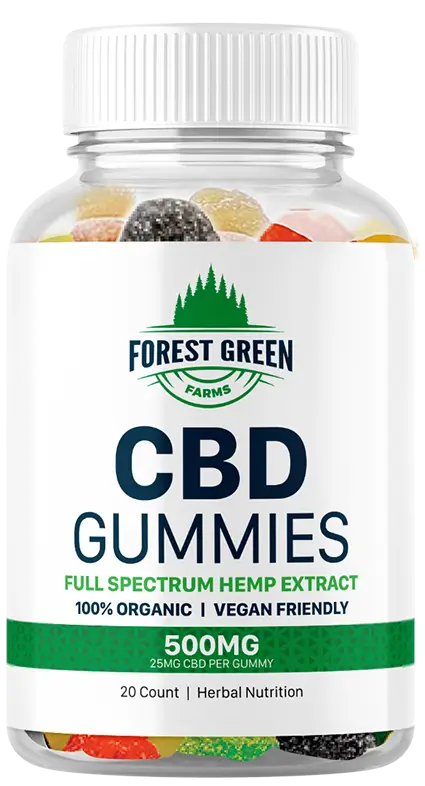
Start with the product identity. A label should make clear what the item is and how it is intended to be used. Forest Green Farms CBD Gummies are described here as a full-spectrum hemp extract gummy product intended for adult consumers. That description stays within a consumer wellness context. It does not turn the product into a medicine, a prescription substitute or a treatment for any condition.
Next, review the CBD amount. According to the front label, Forest Green Farms CBD Gummies list 500 mg CBD per bottle and 25 mg CBD per gummy. Those two numbers should make mathematical sense with the bottle count. In this case, 20 gummies multiplied by 25 mg equals 500 mg. That consistency is useful, but it still depends on the accuracy of the label and any current batch documentation supplied by the seller.
The serving directions are separate from the strength statement. A label may list 25 mg CBD per gummy, but that does not automatically mean every adult should take one gummy daily or take more after waiting a short period. Follow the delivered product label and the seller’s current instructions. Do not invent a serving routine from a website headline. If you are new to CBD, taking medicines or managing health concerns, professional guidance matters.
Extract type is another important label field. Full-spectrum hemp extract generally means the formula is intended to include a broader profile of naturally occurring hemp compounds. That broader profile is the reason many shoppers research full-spectrum CBD gummies. Still, full-spectrum does not automatically mean THC-free, and it does not prove a clinical effect. A current certificate of analysis should explain cannabinoid content in more detail than a front label can.
Do not skip the ingredient list. The exact ingredient panel should identify sweeteners, gelling agents, flavors, colors, carrier oils and allergens. If a website has not been supplied with the full label, it should not invent ingredients from a photograph. A responsible page should clearly say when the final verified ingredient list still needs to be inserted from the delivered product label. That is more trustworthy than pretending to know what is inside.
Batch information is where label reading becomes quality review. A batch number helps connect the bottle to a lab report. Third-party tested CBD gummies should have current documentation that matches the batch, not a generic certificate from a different product or older production run. Look for cannabinoid values, THC information, testing date, laboratory identity and contaminant screening. If the lab report is hard to read, missing or unrelated, ask questions before ordering.
Legal and safety statements also matter. CBD products should not be presented as FDA approved unless there is a specific approved drug context, which retail gummies do not have. The website should say that statements have not been evaluated by the Food and Drug Administration and that the product is not intended to diagnose, treat, cure or prevent disease. That language is not decorative. It helps keep the product in the correct category.
Good label reading ends with personal context. An adult who drives for work, takes medication, is subject to drug testing, has liver concerns or uses substances that cause drowsiness has different risk questions than someone without those factors. Keep gummies away from children and pets, avoid driving until individual effects are understood and stop use after an unwanted reaction. Reading a CBD label is not just about numbers. It is about deciding whether the product, the documentation and your personal circumstances line up responsibly.
Pay close attention to total CBD versus per-gummy CBD. Total bottle strength can sound impressive, but the per-gummy number is what helps an adult understand a labelled serving amount. The Forest Green Farms front label presents both numbers, which is useful because it lets shoppers see the relationship between the bottle and each gummy. When a product only advertises a large bottle total and hides the serving strength, comparison becomes harder.
Look for words that need evidence. Natural, organic, vegan, full-spectrum and tested can all appear on hemp product pages, but they do different kinds of work. Some are branding language, some are ingredient or formulation statements and some require documentation to verify. A responsible website should avoid turning a label phrase into an independent certification claim. If certification, ingredient or laboratory documents are not supplied, the safest language is: according to the product label.
The warning panel should be easy to find. A CBD label or product page should tell adults to keep the product away from children and pets, avoid driving until individual effects are understood and speak with a professional when medication, pregnancy, breastfeeding, surgery, liver concerns, sedatives, alcohol or drug testing are relevant. If a label focuses only on benefits and hides cautions, it is not giving shoppers a balanced picture.
Finally, compare the label to the seller page before checkout. The name, bottle count, strength, extract type and package description should align. If the seller page says something different from the bottle image or if pricing language is unclear, do not assume the most favorable interpretation. Reading a CBD label well means asking whether the complete purchasing experience is consistent, transparent and cautious enough for an adult wellness product.
Responsible-use reminder
CBD research continues to develop. This article is educational and does not claim that Forest Green Farms CBD Gummies diagnose, treat, cure or prevent any disease.